Why Choose Clinical Lighting Solutions for Hospitals?

Hospitals are places of precision, pressure, and constant human need. In these environments, Clinical lighting solutions influence more than visibility. They can support accurate examinations, safer movement, clearer communication, and a calmer patient experience. A nurse checking medication at 2 a.m. needs focused light without waking an entire ward. A surgeon needs stable, shadow-controlled illumination. Patients need comfort, not harsh glare from an exposed ceiling fixture.

Dr. Mariana Figueiro, a leading lighting researcher and director of the Lighting Research Center, has said, “Light is the most powerful synchronizer of the circadian system.” Her observation explains why hospital lighting should address biological needs alongside clinical tasks. Tunable white systems, appropriate color rendering, and carefully controlled brightness can help distinguish skin tones, wounds, instruments, and printed information. Daylight-responsive controls may also reduce unnecessary energy use while preserving visual comfort.

Good design remains a practical discipline. It considers room geometry, infection-control requirements, maintenance access, and the different needs of staff, patients, and visitors. Yet no lighting plan is perfect. Poor calibration can create glare. Excessive blue-rich light may disturb rest. Automated controls may confuse staff when interfaces are unclear. These weaknesses deserve honest review, not polished promises. The strongest Clinical lighting solutions combine clinical evidence, user feedback, and post-installation measurement. When a corridor feels safer, a bedside assessment becomes easier, or a patient finally sleeps, lighting proves its value quietly. Sometimes, that is the real test.
Why Choose Clinical Lighting Solutions for Hospitals?

What Clinical Lighting Solutions Mean in Hospital Environments

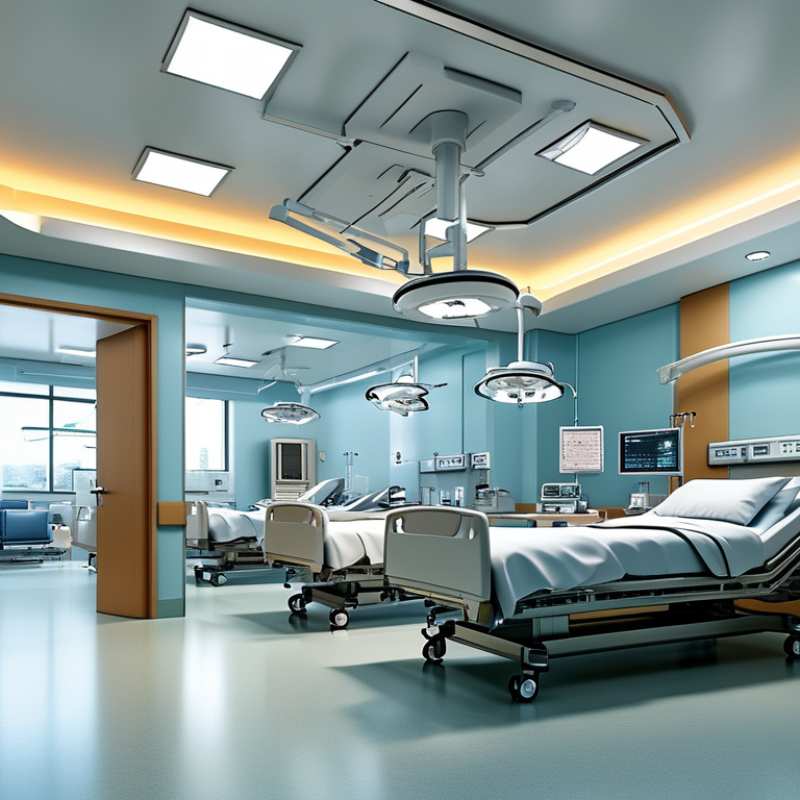
Clinical lighting solutions in hospitals mean more than bright fixtures on ceilings. They create a coordinated system for patient care, staff movement, cleaning, and observation. In a typical ward, ambient light supports safe navigation. Focused task light reveals skin color, wounds, medication labels, and equipment readings. Adjustable examination light provides stronger, controlled illumination during patient assessments. It can also reduce unnecessary exposure around nearby beds. These layers must work together.

A practical design begins with the room, not the product. Designers study bed position, staff sightlines, ceiling height, reflective surfaces, and daylight changes. Low-glare optics matter because tired nurses should not face harsh reflections during night rounds. Dimmable controls help preserve patient sleep while maintaining safe visibility. High color rendering helps clinicians distinguish subtle tissue and skin-tone changes. In procedure areas, even illumination and shadow control become more demanding. Small details matter.

Reliable systems also require cleanable materials, simple controls, emergency planning, and routine testing. Maintenance teams need access without disrupting care. Infection-control requirements can influence housing shapes and surface selection. No lighting plan is perfect. A poorly placed fixture may create a shadow over the patient’s face or screen. That weakness should be documented, reviewed, and corrected through staff feedback. Real hospital experience shows that comfort and clinical accuracy often depend on adjustments made after installation. Good lighting remains observable, measurable, and responsive to changing care needs.

Why Choose Clinical Lighting Solutions for Hospitals?

Clinical lighting solutions provide task-appropriate illumination, visual comfort, glare control, and reliable color rendering across different hospital environments. The chart below shows representative maintained illuminance targets commonly used in healthcare lighting guidance.

Illuminance is measured in lux (lx). Actual requirements vary by national regulations, room function, patient needs, and hospital design standards. Operating-room surgical fields require specialized lighting far above the ambient levels shown here.

How Clinical Lighting Supports Patient Care and Medical Procedures

Clinical lighting solutions help hospitals create safer, more controlled spaces for patient care and medical procedures. In a consultation room, balanced illumination can reveal skin tone changes, swelling, bruising, or wound edges more clearly. Accurate color rendering matters during examinations. It helps clinicians notice details that ordinary ceiling lights may hide.

Procedure areas need focused, shadow-reduced light without causing eye strain. Adjustable fixtures allow medical teams to direct light toward a treatment site while keeping nearby surfaces visible. This supports cleaner workflows and reduces unnecessary movement around the patient.

In recovery rooms, softer lighting can support rest while maintaining enough visibility for observation and routine care. The right balance is not always easy. Brightness that helps one procedure may disturb a tired patient.

Tips: Choose adjustable lighting with reliable color accuracy. Check glare from monitors and polished surfaces. Use dimming controls for different care stages. Schedule inspections, cleaning, and lamp performance checks. Ask clinical staff for feedback, not just facility managers. Small problems often appear during night shifts. A light may seem effective during installation but feel harsh after hours of use. Staff experience should guide revisions. Lighting plans should also consider emergency visibility, infection-control routines, ceiling height, and the practical reach of caregivers. Good clinical lighting is not merely bright; it is dependable, comfortable, and matched to each care task.

Which Hospital Areas Benefit Most from Specialized Lighting

Why Choose Clinical Lighting Solutions for Hospitals?

Hospital lighting affects more than visibility. It supports clinical accuracy, patient comfort, staff concentration, and safer movement. In operating rooms, high color rendering helps clinicians distinguish tissue tones and subtle changes. Adjustable beams can reduce shadows around the surgical field. The system must also limit glare from monitors and polished surfaces. Small details matter.

Intensive care units benefit from controllable, low-glare lighting. Nurses may need bright task light during assessments, while patients need darker conditions for sleep. Tunable white light can support a clearer day-and-night rhythm, although results vary between individuals. Patient rooms need calm illumination, readable controls, and enough light for examinations. Many plans overlook the bathroom. That is a mistake.

Emergency departments require fast visual recognition and durable fixtures. Even, flicker-controlled lighting can help staff read labels, observe skin color, and move safely through crowded spaces. Imaging rooms need carefully managed illumination, since reflections can interfere with screens and patient positioning. Corridors, stairwells, pharmacies, and laboratories also benefit from specialized solutions. Corridors should avoid harsh contrast between rooms and walking routes. In pharmacies and laboratories, accurate color perception supports careful identification and preparation.

Lighting design should follow clinical workflows, cleaning routines, ceiling heights, and maintenance access. A technically impressive system can still fail if staff cannot adjust it quickly. Feedback from nurses, technicians, patients, and facilities teams is essential. The first plan is rarely perfect. Testing fixtures in real rooms often reveals uncomfortable shadows, confusing controls, or unwanted reflections.

Why Choose Clinical Lighting Solutions for Hospitals? — Which Hospital Areas Benefit Most from Specialized Lighting

Hospital Area Primary Visual Task Typical Maintained Illuminance Recommended Light Quality Specialized Lighting Solution Key Benefit
Patient Rooms Patient comfort, reading, routine nursing care, and observation 100–300 lux High color rendering; warm-to-neutral white light; low glare Layered ambient, reading, examination, and night lighting with dimming controls Supports comfort, orientation, routine care, and sleep-friendly nighttime conditions
Examination and Treatment Rooms Patient assessment, wound care, injections, and clinical procedures 300–1,000 lux High color rendering with uniform, shadow-controlled illumination Adjustable examination luminaires combined with general ambient lighting Improves visibility of skin tone, tissue condition, instruments, and treatment areas
Operating Rooms Fine surgical work and continuous observation of the operative field 1,000–2,000 lux for general surgical lighting; substantially higher at the surgical field Very high color rendering, stable output, low shadowing, and controlled glare Dedicated surgical lights with backup power, adjustable intensity, and coordinated ambient lighting Supports accurate tissue differentiation, depth perception, and reduced visual fatigue
Intensive Care Units Continuous patient monitoring, procedures, and equipment reading 100–300 lux for general care; higher task lighting when required Dimmable, low-glare lighting with patient- and staff-controlled zones Bedside examination lighting, indirect ambient lighting, and independently controlled night modes Balances clinical visibility with patient rest and reduced disturbance during the night
Nurses’ Stations and Clinical Workstations Charting, electronic records, medication preparation, and monitoring 300–500 lux Uniform illumination with low reflected glare on screens Glare-controlled task lighting and appropriately positioned indirect or direct-indirect luminaires Supports documentation accuracy, screen readability, and staff visual comfort
Pharmacies and Medication Preparation Areas Reading labels, identifying medicines, measuring, and preparing doses 500 lux High color rendering, uniform light distribution, and minimal shadowing Dedicated task lighting over preparation surfaces with controlled brightness and glare Improves label legibility and visual identification of packaging and medication details
Laboratories Sample handling, inspection, analysis, and documentation 500 lux High color rendering, stable illumination, and low flicker Uniform ceiling lighting supplemented by bench-level task lighting where needed Supports accurate observation of samples, instruments, and measurement surfaces
Corridors and Circulation Areas Wayfinding, walking, patient transport, and staff movement 100–200 lux Uniform, low-glare illumination with controlled contrast Continuous or regularly spaced indirect/direct-indirect lighting with dimming schedules Improves navigation and safety while helping avoid visual discomfort for patients
Stairways and Ramps Step-edge visibility and safe changes in level 150–200 lux Uniform lighting with minimal shadows and clear contrast at step edges Well-distributed wall, ceiling, or handrail-adjacent lighting with emergency operation Reduces trip hazards and supports safe movement for patients, visitors, and staff
Emergency Departments Rapid assessment, triage, treatment, and patient transfer 300–1,000 lux depending on the task High color rendering, fast controllability, low glare, and reliable backup operation Flexible zoning with high-output examination lighting and separate circulation controls Provides rapid adaptation between routine observation and urgent clinical procedures
Imaging and Diagnostic Areas Patient positioning, equipment operation, and image review 100–300 lux for patient positioning; lower levels may be needed during image review Dimmable lighting with low glare and controlled reflections Scene-based lighting that separates patient preparation from screen-focused tasks Supports safe positioning and helps reduce reflections that can interfere with displays
Sterilization and Clean Utility Areas Inspection, cleaning, packaging, and preparation of medical equipment 300–500 lux Uniform, high-quality light with good color rendering and easy-to-clean fixtures Sealed, cleanable luminaires with task lighting over inspection and preparation surfaces Supports visual inspection, workflow accuracy, and hygienic maintenance requirements

Reference note: Illuminance ranges are representative planning values derived from commonly used healthcare lighting guidance, including EN 12464-1 and IES recommendations. Final levels should be verified against the applicable local code, room function, patient-care protocol, glare limits, emergency-lighting requirements, and the project’s lighting design calculations.

Key Features of Effective Clinical Lighting Systems

Effective clinical lighting begins with accurate visual tasks, not decorative brightness. In examination rooms, clinicians need clear skin tones, wound edges, and subtle tissue changes. High color rendering supports these observations, especially when daylight changes across the room. Adjustable color temperature can help staff shift between examination and documentation. It needs careful control. Excessive cool light may feel harsh during long shifts. Low-glare optics reduce reflections on screens, polished instruments, and protective eyewear. Uniform illumination also limits distracting dark pockets around the patient bed. However, brightness alone cannot solve every visibility problem. That assumption deserves review.

Effective systems should manage flicker, shadows, glare, and changing clinical activities. Dimming controls allow staff to maintain patient comfort during consultations and overnight monitoring. Occupancy and daylight sensors can reduce unnecessary energy use without leaving critical areas poorly lit. Fixtures should have smooth, sealed surfaces that tolerate routine cleaning and support infection-control practices. Maintenance access matters too. A failed lamp above a treatment area creates an immediate operational concern. Emergency illumination and dependable backup power require regular testing, not occasional attention. During commissioning, teams should measure light levels at the bed, work surfaces, and staff sightlines. Experienced installers also check reflections after monitors and equipment are positioned. Real rooms rarely match drawings perfectly. Clinical feedback may reveal uncomfortable brightness, confusing controls, or shadows that calculations missed. Reliable lighting therefore combines technical performance, human observation, documented testing, and periodic adjustment.

How to Evaluate Clinical Lighting for Safety, Efficiency, and Comfort

Clinical lighting must be judged at the patient’s bed, not only on a showroom wall.

Measure illuminance, uniformity, glare, colour rendering, flicker, and emergency performance. IES RP-29-22 provides healthcare lighting guidance for examination, treatment, circulation, and patient areas. Check readings with a calibrated meter at working height. A bright ceiling can still leave a nurse’s hands in shadow.


Safety comes first.

Colour rendering deserves close attention. The standard EN 12464-1:2021 recommends high colour rendering for medical examination areas, helping staff distinguish skin tone, tissue, and wound changes.

Avoid visible flicker, especially near monitors and moving equipment. Review the driver’s flicker data, not just the fixture label. That small detail is often missed.

Efficiency should include maintenance. The U.S. Department of Energy reports that LED lighting can use up to 75% less energy and last up to 25 times longer than incandescent lighting. Hospitals, however, need more than lower electricity bills. Compare control zones, cleaning access, replacement time, and failure risk. Dimming can support patient comfort, but uncontrolled automation may leave staff working in inadequate light. Test daytime, night-time, and emergency scenes with nurses and patients present. Their feedback may challenge the original design. That is useful. A technically compliant room can still feel harsh, tiring, or strangely cold.